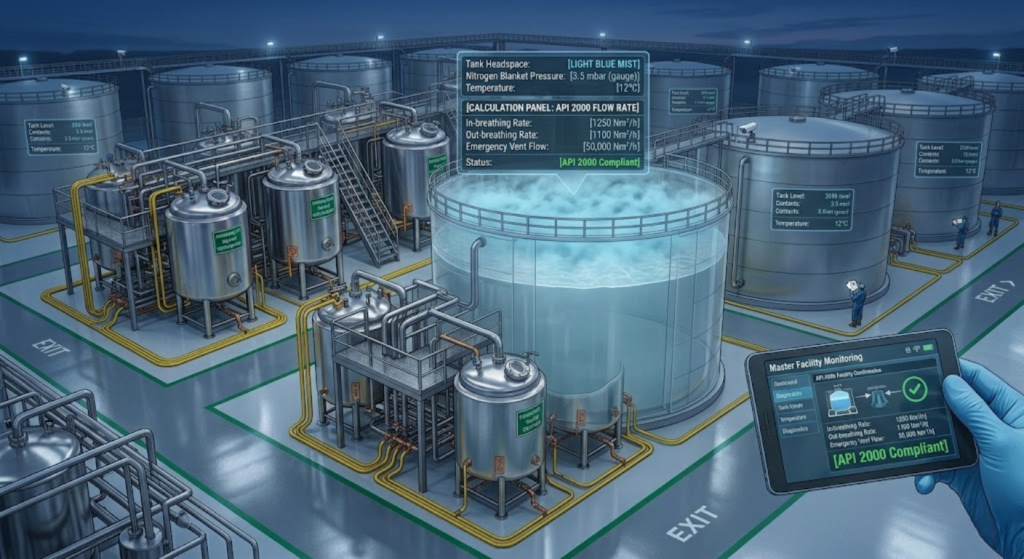
N₂ Inertization Case Study – Storage Tanks (ZCL Chemicals, Ankleshwar)
Project Number: 23-674.47.01-zc-akv-hse
Nitrogen (N₂) Inertization Study No.: 01
- Project Overview
A Nitrogen (N₂) Inertization Study was conducted for storage tanks at ZCL Chemicals Limited, Ankleshwar, Gujarat. The objective of the study was to determine the required nitrogen flow rate to maintain an inert atmosphere within storage tanks handling flammable liquids such as methanol, toluene, and acetone.
The study focused on evaluating inbreathing requirements arising from liquid movement and thermal effects, ensuring that oxygen concentration remains below limiting oxygen concentration (LOC) to prevent fire and explosion risks.
The assessment was carried out in accordance with API 2000 and NFPA 69, incorporating detailed engineering calculations and site-specific operational data.
- Objective
- To calculate nitrogen requirement for inertization of storage tanks
- To evaluate inbreathing requirements due to liquid movement and thermal effects
- To ensure oxygen concentration remains below LOC
- To recommend safe operating and design practices for inertization system.
- Methodology
Study Preparation
The study involved collection and analysis of:
- Tank details (capacity, type, dimensions)
- Chemical properties (flash point, volatility)
- Pump flow rates and operating conditions
- Existing tank safety features (BVFA, breather valves).
N₂ Inertization Methodology
The following structured approach was adopted:
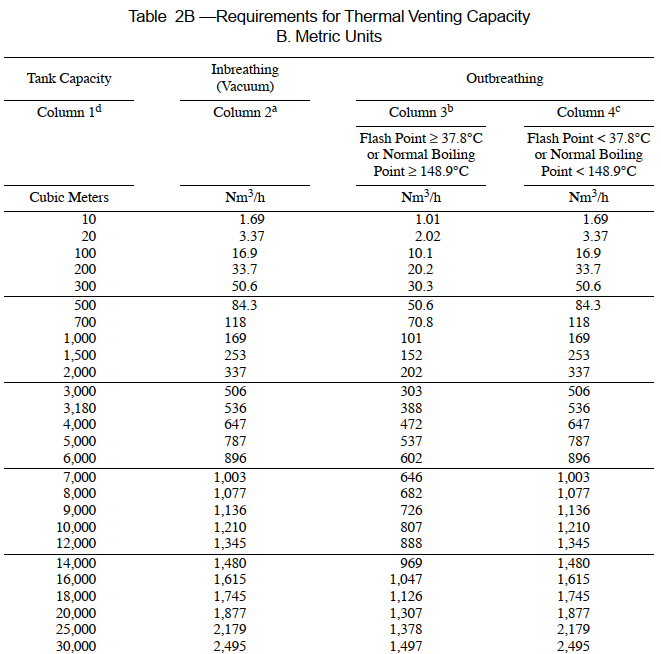
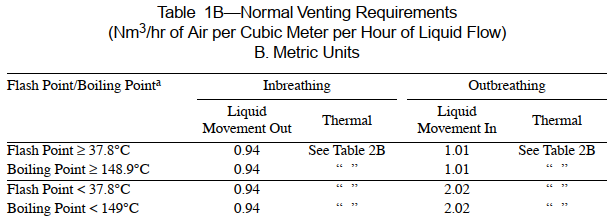
- Determination of normal inbreathing due to liquid movement
- Calculation of thermal inbreathing due to atmospheric changes
- Application of API 2000 tables for venting requirements
- Interpolation for intermediate tank capacities
- Calculation of maximum nitrogen requirement (normal + thermal)
- Evaluation of nitrogen supply system adequacy
- Development of recommendations for safe inertization
- Reporting & documentation
- Key distinctive characteristics of Emergency Action Plan:
- Standards-Based Engineering Approach – Based on API 2000 and NFPA 69
- Scenario-Based Evaluation – Consideration of both normal and worst-case thermal conditions
- Tank-Specific Calculations – Individual analysis for multiple storage tanks
- Integration with Process Conditions – Incorporation of real operating flow rates and conditions
- Focus on Explosion Prevention – Ensuring oxygen levels remain below LOC.
- Key Outcomes
- Nitrogen Requirement Quantified for both normal and worst-case operating conditions
- Alignment with API 2000 & NFPA 69 for inertization design and safety
- Adequacy of Inertization System Evaluated based on process conditions
- Opportunities Identified for System Optimization (pressure control, flow capacity)
- Practical Recommendations Provided to strengthen safe inert operation.
- Conclusion
The N₂ Inertization Study provides a structured and reliable approach to maintaining safe storage conditions for flammable liquids. The assessment confirms that nitrogen blanketing is an effective method to prevent oxygen ingress and reduce ignition risk within storage tanks.
By quantifying nitrogen requirements under both normal and worst-case conditions, the study ensures that the inertization system is robust and capable of handling operational and environmental variations. Implementation of the recommendations will further enhance process safety and ensure compliance with recognized industry standards.