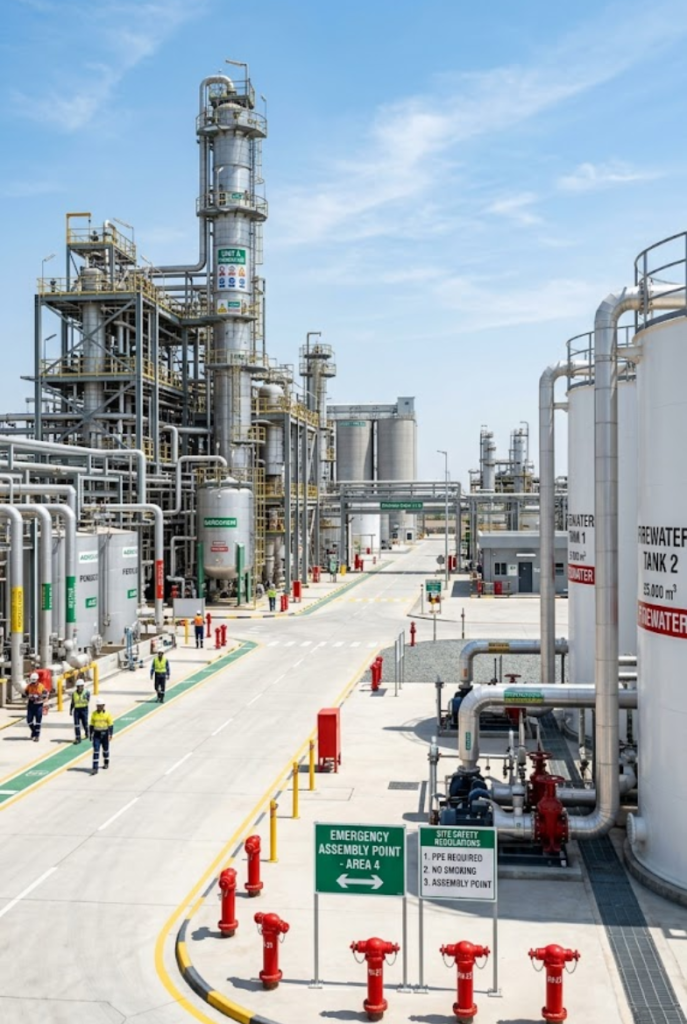
Emergency Action Plan – UPL, Unit-41
Project Number: 22-622.08.17-upl-chd-eap-unit41
Emergency Action Plan Serial No.: 01
- Project Overview
An Emergency Action Plan (EAP) Study was conducted for the agrochemical manufacturing facility of UPL Unit-41 located at Derabassi, Punjab. The objective of the study was to establish a structured and effective emergency preparedness and response system to manage potential industrial emergencies such as fire, explosion, toxic release, and natural disasters.
The study involved a comprehensive review of plant operations, hazardous chemical inventory, storage and process hazards, existing safety systems, and emergency infrastructure. The plan integrates on-site and off-site emergency management strategies to minimize risk to personnel, property, and the environment.
The Emergency Action Plan was developed in alignment with statutory requirements and incorporates coordination mechanisms between internal teams and external emergency services.
- Objective
- To identify potential emergency scenarios including fire, explosion, toxic gas release, and natural calamities
- To establish a structured emergency response organization with defined roles and responsibilities
- To ensure effective communication and alarm systems for emergency situations
- To minimize impact on personnel, property, and environment
- To provide procedures for evacuation, rescue, firefighting, and medical response
- To integrate on-site emergency actions with off-site emergency response mechanisms.
- Methodology
Study Preparation
Prior to developing the Emergency Action Plan, detailed data was collected and reviewed, including:
- Plant layout and facility details
- Hazardous chemical inventory (e.g., Chlorine, Hydrogen, DMS, H2S)
- Process and storage hazard information
- Fire protection and safety systems
- Past incident records and safety studies (HAZOP, QRA, HIRA)
An assumption register and emergency scenario identification matrix were developed to support structured planning.
Emergency Action Plan Methodology
The Emergency Action Plan was developed using a systematic approach:
- Identification of credible emergency scenarios (fire, explosion, toxic release, natural disasters)
- Risk and Environmental Impact Assessment
- Identification of vulnerable zones (onsite & offsite population)
- Review of existing fire protection, medical, and safety infrastructure
- Development of Emergency Organization Structure
- Definition of roles (SMC, Incident Controller, Emergency Response Team)
- Establishment of Emergency Control Centre (ECC)
- Development of communication and alarm protocols
- Preparation of scenario-based emergency response procedures
- Integration of onsite and offsite emergency plans
- Training, mock drills, and continuous improvement framework
- Reporting & documentation
- Key distinctive characteristics of Emergency Action Plan:
- Comprehensive Multi-Hazard Coverage – Includes fire, explosion, toxic release, electrical hazards, and natural disasters such as floods and earthquakes
- Structured Emergency Organization – Clearly defined hierarchy including Site Main Controller (SMC), Incident Controller (IC), and Emergency Response Teams
- Integration with Off-Site Emergency Systems – Alignment with district disaster management and external agencies
- Detailed Communication Framework – Multi-level communication strategy covering internal teams, external agencies, and public
- Scenario-Based Action Plans – Specific procedures for fire, chemical leakage, electrical shock, bomb threat, and natural calamities
- Incorporation of Risk Studies – Integration with HAZOP, QRA, HIRA, and EIA findings.
- Key Outcomes
- Robust Emergency Preparedness Framework Established – Defined procedures for handling various emergency scenarios effectively
- Clear Roles and Responsibilities – Structured emergency organization ensures quick decision-making and response
- Improved Fire and Safety Infrastructure Utilization – Fire water systems, extinguishers, hydrants, and emergency equipment integrated into response planning
- Efficient Communication System Developed – Alarm systems, sirens, and communication protocols enable rapid response
- Enhanced Personnel Safety Measures – Defined evacuation routes, assembly points, and rescue procedures
- Integration with External Emergency Services – Coordination with fire brigade, hospitals, and district authorities ensured.
- Conclusion
The Emergency Action Plan Study for UPL Unit-41 demonstrates a comprehensive and systematic approach to emergency preparedness and response in an agrochemical manufacturing facility. The plan effectively integrates hazard identification, risk assessment, emergency organization, and response procedures to ensure rapid and coordinated action during emergencies.
The study highlights the importance of structured emergency planning, clear communication systems, and regular training in minimizing the impact of industrial incidents. With proper implementation, periodic review, and mock drills, the Emergency Action Plan ensures enhanced safety, regulatory compliance, and operational resilience of the facility.
.