
Introduction In any industry, safety isn’t just a priority—it is a core value that protects the most important asset: the people. A comprehensive Safety Manual acts as a strategic roadmap, moving an organization from reactive measures to a proactive culture of health and well-being
.
The Core Mission of Your Safety Manual The primary objective of a Safety Manual is to establish clear, actionable guidelines that safeguard every individual in the workplace. It is designed to:
- Prevent Harm: Create protocols that stop accidents and illnesses before they occur.
- Ensure Compliance: Align operations with Indian Standard Acts, OSHA, and NFPA guidelines.+1
- Define Responsibility: Clarify the roles of employees, supervisors, and managers in maintaining safety standards.
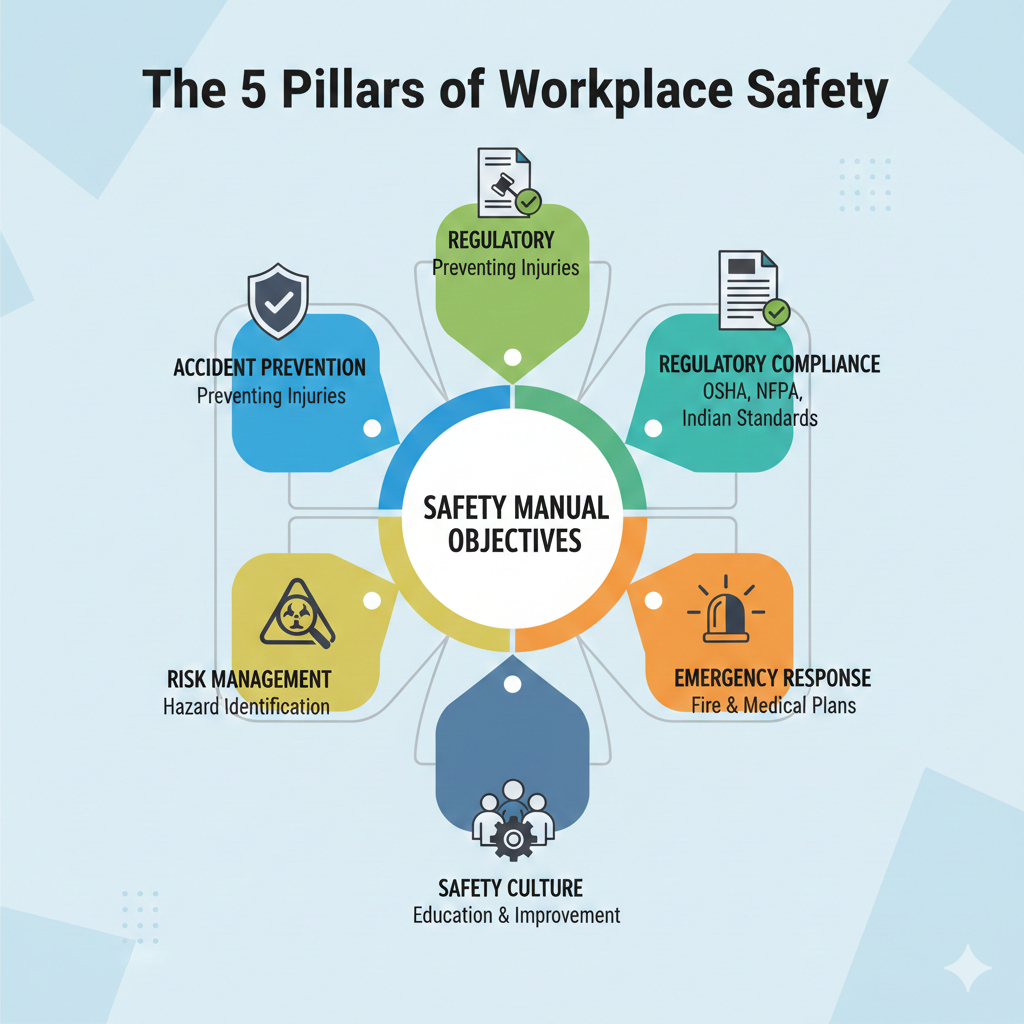
🛡️ Our Safety Manual is built on these 5 essential pillars to minimize risk and maximize protection for everyone on site.
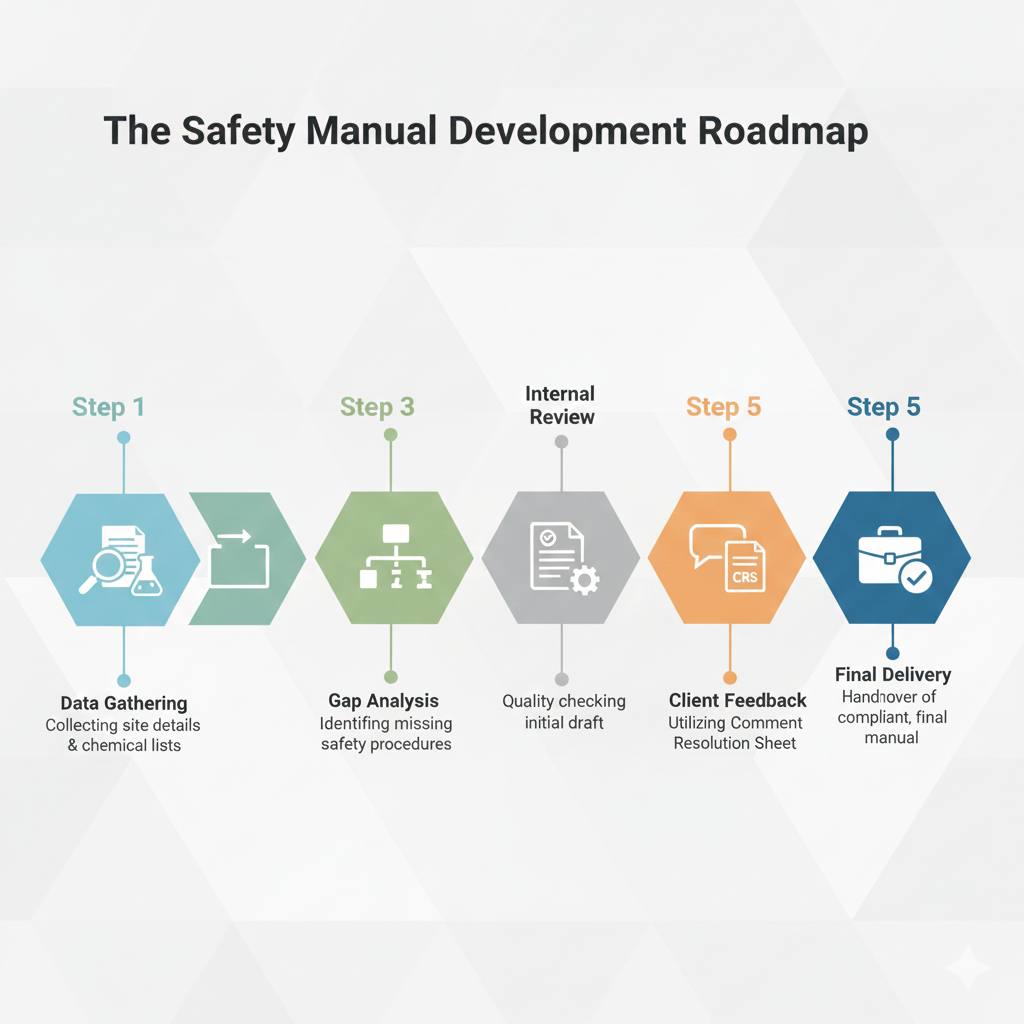
From Data to Deployment: How the Manual is Created A robust manual is not just a generic document; it is a custom-built tool developed through a specific methodology:+1
- Data Collection: Gathering company details, chemical lists, and current safety equipment inventories.+3
- Gap Analysis: Identifying where existing procedures fall short and what additional protocols are needed.
- Drafting & Review: Preparing a preliminary report for internal and client feedback.
- Finalization: Incorporating all comments into a “Comment Resolution Sheet” (CRS) to ensure every concern is addressed before final submission.+2
Comprehensive Coverage: What’s Inside? A professional safety manual covers everything from general rules to highly specific high-risk tasks. This includes:
- Operational Safety: Protocols for hot work, confined spaces, and working at heights.+1
- Emergency Preparedness: Clear action plans for fire protection, chemical spills, and medical emergencies.+2
- Technical Safety: Detailed guides for electrical isolation, machinery guarding, and civil job safety.
Taking Ownership of Safety The best manual in the world is only effective if it is put into practice. While designated safety officers provide oversight, the ultimate responsibility for adhering to these guidelines lies with every single employee and manager on the floor. By committing to these standards, we don’t just follow rules—we protect lives.