

In industrial environments, electrostatic discharge is often the “silent” trigger for catastrophic dust explosions. Understanding the mechanics of static electricity and the conditions required for ignition is vital for maintaining a safe facility.
The Science of Static Ignition
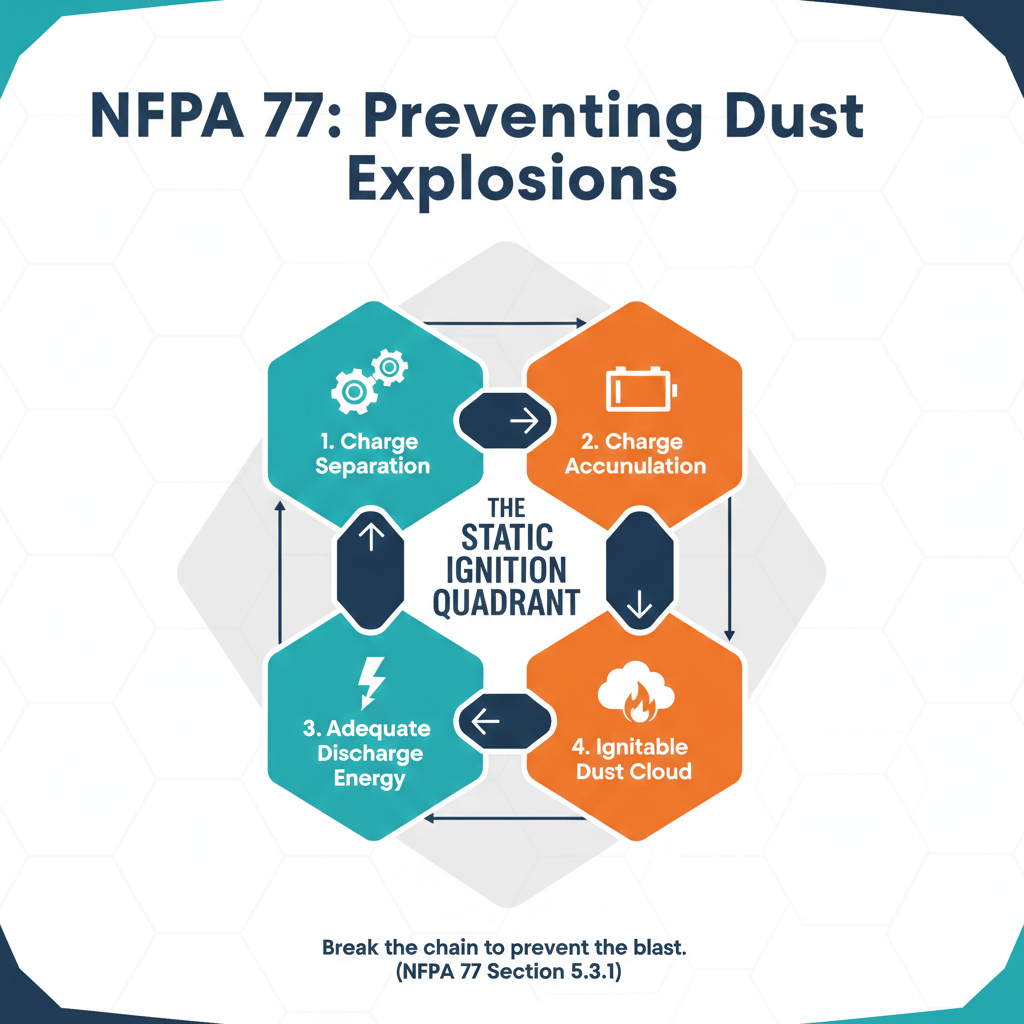
Static electricity is generated whenever surfaces in contact separate, but it only becomes a hazard under specific circumstances. According to NFPA 77 (Section 5.3.1), four distinct conditions must be met simultaneously for a static discharge to ignite combustible dust:
- Charge Separation: An effective means of separating charges must be present.
- Charge Accumulation: A means of accumulating these separated charges and maintaining electrical potential must exist.
- Discharge Potential: A discharge of static electricity with adequate energy must be possible.
- Ignitable Mixture: The discharge must occur within an ignitable mixture of dust and air.
Classification of Explosive Dust Atmospheres
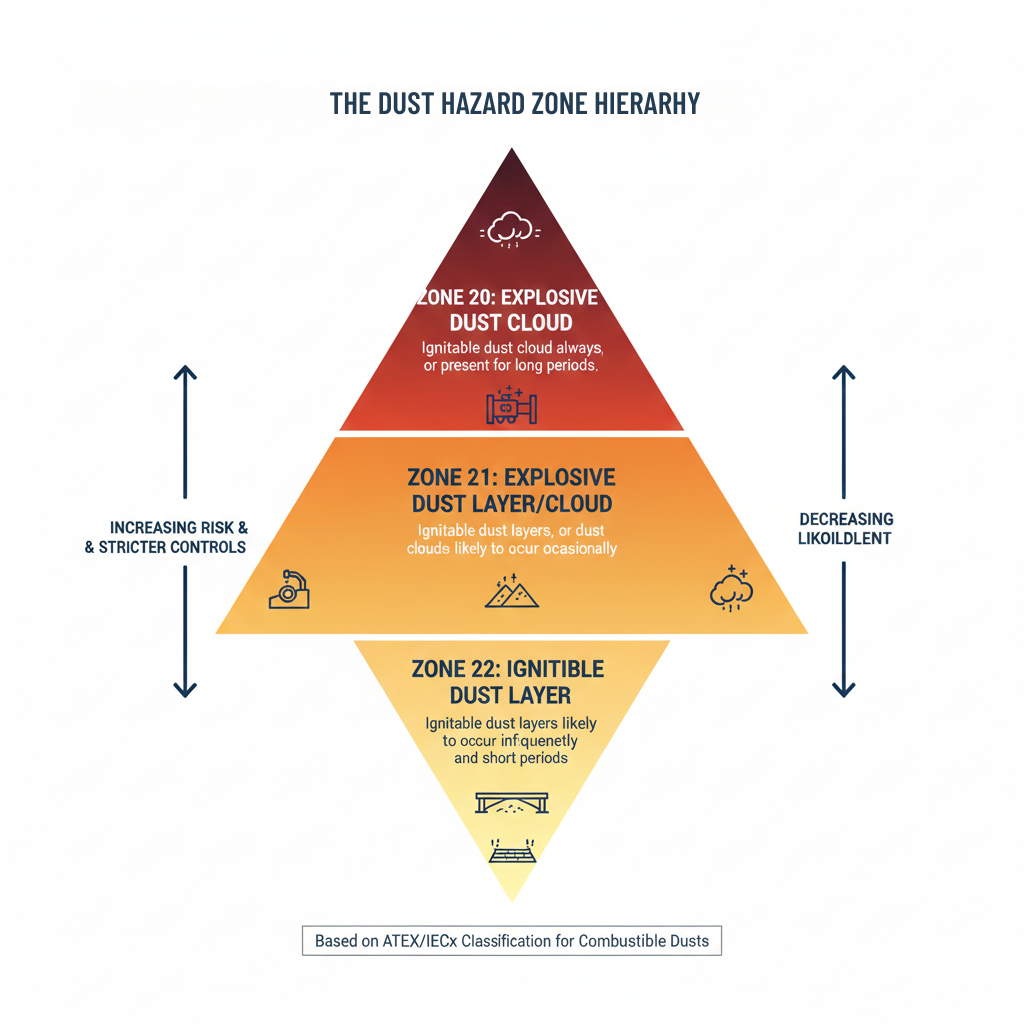
To manage risks effectively, work areas are divided into “Zones” based on the frequency and duration of explosive dust clouds:
- Zone 20: Areas where an explosive dust cloud is present continuously, for long periods, or frequently.
- Zone 21: Areas where an explosive dust cloud is likely to occur occasionally during normal operations.
- Zone 22: Areas where an explosive dust cloud is unlikely to occur in normal operation, and if it does, it persists for only a short period.
Essential Protection Measures
Preventing an explosion requires a multi-layered defense strategy focused on grounding and atmosphere control:
- Grounding: All conductive parts must be grounded when filling or handling combustible dusts.
- Ventilation: Using proper ventilation to avoid the creation of explosive atmospheres.
- Inerting: Introducing inert gases to eliminate the possibility of explosion.
- Explosion Suppression: Implementing constructive protection measures to suppress a blast if ignition occurs.
Conclusion
Electrostatic hazards are manageable when approached with technical precision. By adhering to NFPA 77 standards and maintaining rigorous grounding and zone-based controls, industries can safeguard their personnel and assets from the devastating impact of dust explosions.