
HSE RISK MANAGEMENT SERVICES PVT LTD Website: www.hse-rms.com Email ID: yashpal@hse-rms.com ,Website: www.hse-rms.com <br>Email ID: yashpal@hse-rms.com
• To identify the requirement of anti-static shoes and cotton clothing in Combustible/ Hazardous material handling • To identify the requirement of conductive platform for charging Combustible/ Hazardous material handling • To identify the requirement of anti-static shoes and cotton clothing in Combustible Hazardous material handling • To identify the requirement of conductive platform for charging Combustible/ Hazardous material handling 



REQUIREMENT OF ANTI-STATIC CLOTHING IN DUST HANDLING PLANT PRESENTED BY : MR. YASHPAL SINGH REQUIREMENT OF ANTI-STATIC CLOTHING IN DUST HANDLING PLANT PRESENTED BY : MR. YASHPAL SINGH
OBJECTIVE OBJECTIVE
• NFPA 499 (2013)- Recommended Practice for the Classification of Combustible Dusts and of Hazardous (Classified) Locations for Electrical Installations in Chemical Process Areas • NFPA 70 (2011)- National Electrical Code • NFPA 77 (2007)- Recommended Practice on Static Electricity • NFPA 499 (2013)- Recommended Practice for the Classification of Combustible Dusts and of Hazardous (Classified) Locations for Electrical Installations in Chemical Process Areas • NFPA 70 (2011)- National Electrical Code • NFPA 77 (2007)- Recommended Practice on Static Electricity 


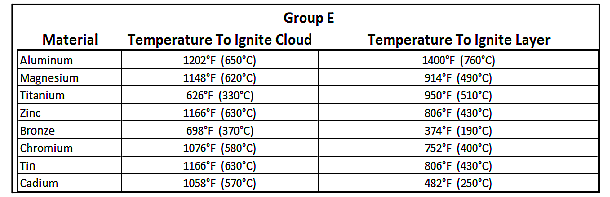
• This paper is limited only to plant handling combustible dust (Group E, F and G dust). • This paper is limited only to plant handling combustible dust (Group E, F and G dust).
Reference Document Reference Document
SCOPE SCOPE
Combustible Dust. Any finely divided solid material that is 420 microns or smaller in diameter (i.e., material that will pass through a U.S. No. 40 standard sieve) that presents a fire or explosion hazard when dispersed and ignited in air or other gaseous oxidizer. (Reference- Section 3.3.7 of NFPA 77) Combustible Dust. Any finely divided solid material that is 420 microns or smaller in diameter (i.e., material that will pass through a U.S. No. 40 standard sieve) that presents a fire or explosion hazard when dispersed and ignited in air or other gaseous oxidizer. (Reference- Section 3.3.7 of NFPA 77) 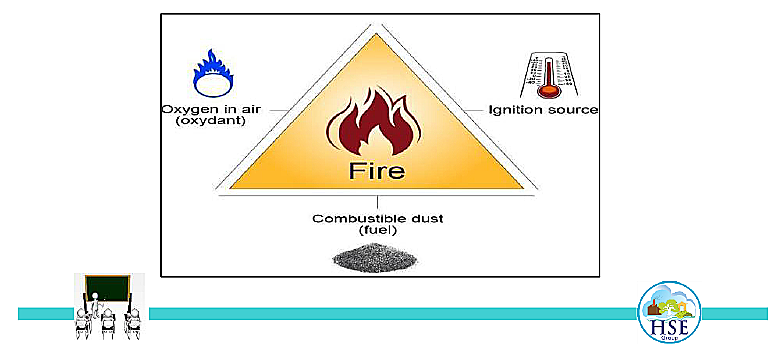


Antistatic. Capable of dissipating a static electric charge at an acceptable rate. (Reference- Section 3.3.1 of NFPA 77) Antistatic. Capable of dissipating a static electric charge at an acceptable rate. (Reference- Section 3.3.1 of NFPA 77)
DEFINITIONS DEFINITIONS
DEFINITIONS DEFINITIONS
Group F. Atmospheres containing combustible carbonaceous dusts that have more than 8 percent total entrapped volatiles or that have been sensitized by other materials so that they present an explosion hazard. Coal, carbon black, charcoal, and coke dusts are examples of carbonaceous dusts. (Reference- Section 500.6 (B) (2) of NFPA 70) Group F. Atmospheres containing combustible carbonaceous dusts that have more than 8 percent total entrapped volatiles or that have been sensitized by other materials so that they present an explosion hazard. Coal, carbon black, charcoal, and coke dusts are examples of carbonaceous dusts. (Reference- Section 500.6 (B) (2) of NFPA 70) 



Group E. Atmospheres containing combustible metal dusts, including aluminum, magnesium, and their commercial alloys, or other combustible dusts whose particle size, abrasiveness, and conductivity present similar hazards in the use of electrical equipment. (Reference- Section 500.6 (B) (1) of NFPA 70) Group E. Atmospheres containing combustible metal dusts, including aluminum, magnesium, and their commercial alloys, or other combustible dusts whose particle size, abrasiveness, and conductivity present similar hazards in the use of electrical equipment. (Reference- Section 500.6 (B) (1) of NFPA 70)
DEFINITIONS DEFINITIONS
DEFINITIONS DEFINITIONS
Triboelectric Charging. Static electric charging that results from contact or friction between two dissimilar materials; also known as frictional charging and contact- separation charging (Reference- Section H.2.11.3 of NFPA 77) Triboelectric Charging. Static electric charging that results from contact or friction between two dissimilar materials; also known as frictional charging and contact- separation charging (Reference- Section H.2.11.3 of NFPA 77) 




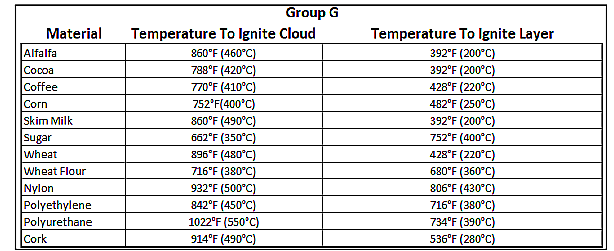
Group G. Atmospheres containing combustible dusts not included in Group E or F, including flour, grain, wood, plastic, and chemicals (Reference- Section 500.6 (B) (3) of NFPA 70) Group G. Atmospheres containing combustible dusts not included in Group E or F, including flour, grain, wood, plastic, and chemicals (Reference- Section 500.6 (B) (3) of NFPA 70)
DEFINITIONS DEFINITIONS
DEFINITIONS DEFINITIONS
Conductive Floor. Flooring that has an average resistance between 2.5 × 10³ ohms and 1 × 10⁶ ohms where measured using specified electrodes placed a specified distance apart. (Reference- Section H.2.13 of NFPA 77) Minimum Ignition Energy (MIE). The energy, expressed in joules, stored in a capacitor that, upon discharge, is just sufficient to effect ignition of the most ignitable mixture of a given fuel mixture under specified test conditions. (Reference- Section H.2.34.1 of NFPA 77) Conductive Floor. Flooring that has an average resistance between 2.5 × 10³ ohms and 1 × 10⁶ ohms where measured using specified electrodes placed a specified distance apart. (Reference- Section H.2.13 of NFPA 77) Minimum Ignition Energy (MIE). The energy, expressed in joules, stored in a capacitor that, upon discharge, is just sufficient to effect ignition of the most ignitable mixture of a given fuel mixture under specified test conditions. (Reference- Section H.2.34.1 of NFPA 77) 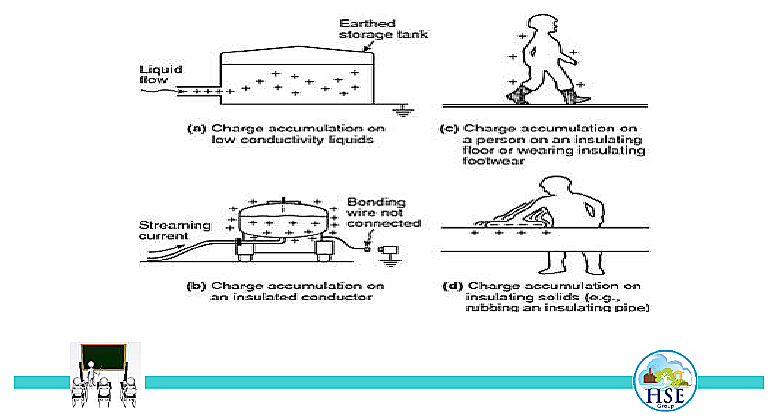

Typical examples of accumulation Typical examples of accumulation
DEFINITIONS DEFINITIONS
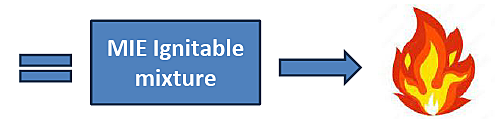
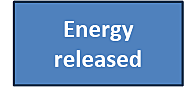
As per Section 5.3.3.4 of NFPA 77 “To be capable of causing ignition, the energy released in the discharge must be at least equal to the minimum ignition energy (MIE) of the ignitable mixture.” • As per Section 5.3.3.4 of NFPA 77 “To be capable of causing ignition, the energy released in the discharge must be at least equal to the minimum ignition energy (MIE) of the ignitable mixture.” 

Interpretation of NFPA 77 Interpretation of NFPA 77
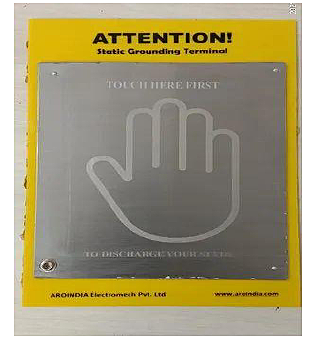
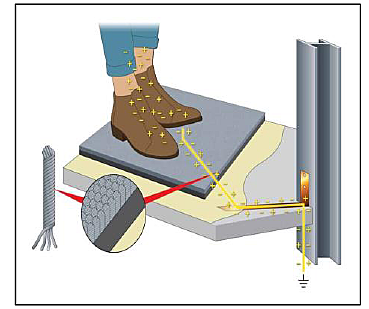
As per Section 7.6 Control of Static Charge on Personnel “The human body is an electrical conductor and can accumulate a static charge if insulated from ground. This charge can be generated by contact and separation of footwear with floor coverings, by induction, or by participation in various manufacturing operations. Where ignitable mixtures exist, the potential for ignition from the charged human body exists, and means to prevent accumulation of static electric charge on the human body might be necessary.” • As per Section 7.6 Control of Static Charge on Personnel “The human body is an electrical conductor and can accumulate a static charge if insulated from ground. This charge can be generated by contact and separation of footwear with floor coverings, by induction, or by participation in various manufacturing operations. Where ignitable mixtures exist, the potential for ignition from the charged human body exists, and means to prevent accumulation of static electric charge on the human body might be necessary.”
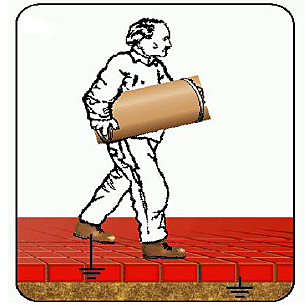
• As per Section 7.6.1 of NFPA 77 “Prevention of Charge Accumulation. Steps to prevent charge accumulation include use of the following: (1) Conductive flooring and footwear • As per Section 7.6.1 of NFPA 77 “Prevention of Charge Accumulation. Steps to prevent charge accumulation include use of the following: (1) Conductive flooring and footwear 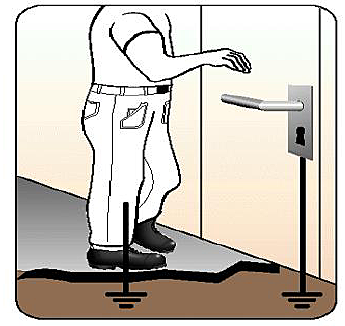




Interpretation of NFPA 77 Interpretation of NFPA 77
Interpretation of NFPA 77 Interpretation of NFPA 77
(2) Personnel-grounding devices (2) Personnel-grounding devices
Interpretation of NFPA 77 Interpretation of NFPA 77 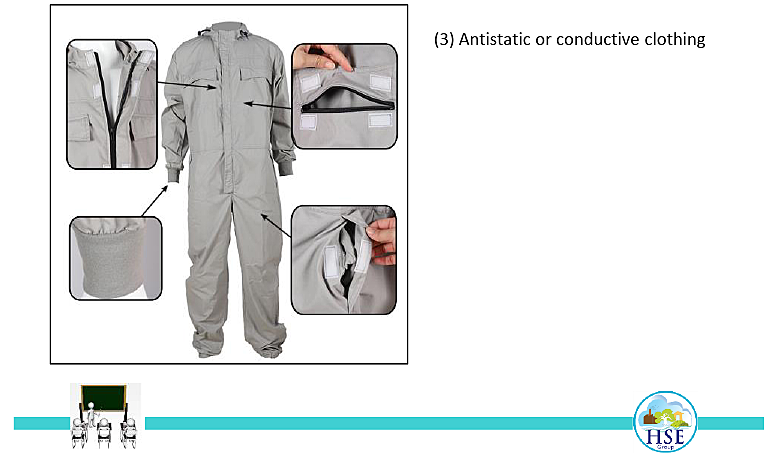


Interpretation of NFPA 77 Interpretation of NFPA 77
• As per Section 7.6.2.2 of NFPA 77 “Electrostatic dissipative (ESD) footwear used in conjunction with conductive flooring provides a means to control and dissipate static electric charges from the human body. Resistance to earth through ESD footwear and conductive flooring should be between 106 ohms and 109 ohms. For materials with very low ignition energies, the resistance to earth through footwear and flooring should be less than 106 ohms. Resistance can be measured with commercially available footwear conductivity testers.” • As per Section 7.6.2.2 of NFPA 77 “Electrostatic dissipative (ESD) footwear used in conjunction with conductive flooring provides a means to control and dissipate static electric charges from the human body. Resistance to earth through ESD footwear and conductive flooring should be between 106 ohms and 109 <br>ohms. For materials with very low ignition <br>energies, the resistance to earth through <br>footwear and flooring should be less than <br>106 ohms. Resistance can be measured <br>with commercially available footwear <br>conductivity testers.”
• As per Section 7.6.2.4 of NFPA 77 “Conductive footwear is footwear designed to have a resistance to ground through the footwear and the floor of less than 106 ohms. It is typically used where materials of low ignition energy, such as explosives and propellants, are handled.” <br><br><br><br><br><br><br><br>• As per Section 7.6.2.4 of NFPA <br>77 “Conductive footwear is <br>footwear designed to have a <br>resistance to ground through the <br>footwear and the floor of less <br>than 106 ohms. It is typically used <br>where materials of low ignition <br>energy, such as explosives and <br>propellants, are handled.”
Interpretation of NFPA 77 Interpretation of NFPA 77 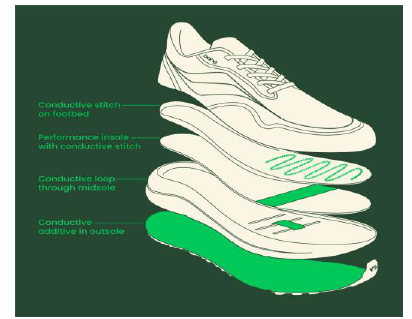



Interpretation of NFPA 77 Interpretation of NFPA 77
<br>
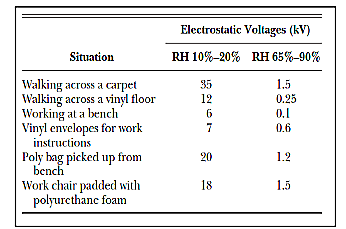
• As per Table H.2.11.3 of NFPA 77 “Electrostatic Voltages Resulting from Triboelectric Charging at Two Levels of Relative Humidity (RH).” <br><br><br><br>• As per Table H.2.11.3 of NFPA <br>77 “Electrostatic Voltages <br>Resulting from Triboelectric <br>Charging at Two Levels of <br>Relative Humidity (RH).”
• As per Table H.2.11.3 of NFPA 77 “For a static electric discharge to ignite a combustible dust, the following four conditions need to be met: (1) An effective means of separating charge must be present. (2) A means of accumulating the separated charges and maintaining a difference of electrical potential must be available. (3) A discharge of the static electricity of adequate energy must be possible. (4) The discharge must occur in an ignitable mixture of the dust.” <br><br><br><br><br><br><br><br><br><br><br>• As per Table H.2.11.3 of NFPA 77 “For a static <br>electric discharge to ignite a combustible dust, <br>the following four conditions need to be met: <br>(1) An effective means of separating charge must <br>be present. <br>(2) A means of accumulating the separated <br>charges and maintaining a difference of electrical <br>potential must be available. <br>(3) A discharge of the static electricity of adequate <br>energy must be possible. <br>(4) The discharge must occur in an ignitable <br>mixture of the dust.” 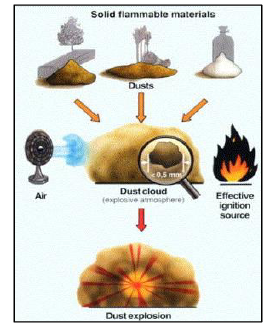



Interpretation of NFPA 77 Interpretation of NFPA 77
<br>
• As per Section 9.5.2 of NFPA 77 “Where large amounts of powder having medium or high resistivities are handled, corona and brush discharges are to be expected. No evidence is available, however, that a corona discharge is capable of igniting a dust cloud. Likewise, no evidence is available that a brush discharge can ignite dusts with MIEs greater than 3 mJ, provided that no flammable gas or vapor is present in the dust cloud.” <br><br><br><br><br><br><br><br><br><br><br>• As per Section 9.5.2 of NFPA 77 <br>“Where large amounts of powder <br>having medium or high resistivities are <br>handled, corona and brush discharges <br>are to be expected. No evidence is <br>available, however, that a corona <br>discharge is capable of igniting a dust <br>cloud. Likewise, no evidence is available <br>that a brush discharge can ignite dusts <br>with MIEs greater than 3 mJ, provided <br>that no flammable gas or vapor is <br>present in the dust cloud.”
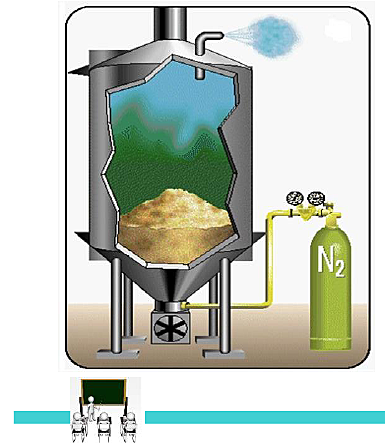
• As per Section 10.1.2.4 of NFPA 77 “Bulking brush discharges contain energies on the order of 10 mJ. To minimize the risks associated with bulking brush discharge, powders that have minimum ignition energies (MIEs) of 10 mJ or less should be loaded only into containers of 2 m3 or less, unless the vessel is inerted.” <br><br><br><br><br><br><br><br>• As per Section 10.1.2.4 of NFPA 77 <br>“Bulking brush discharges contain <br>energies on the order of 10 mJ. To <br>minimize the risks associated with <br>bulking brush discharge, powders that <br>have minimum ignition energies (MIEs) <br>of 10 mJ or less should be loaded only <br>into containers of 2 m3 or less, unless <br>the vessel is inerted.”
Interpretation of NFPA 77 Interpretation of NFPA 77 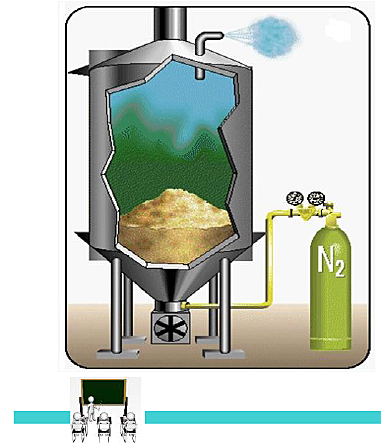
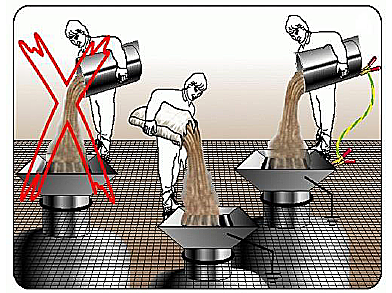


Interpretation of NFPA 77 Interpretation of NFPA 77
<br>
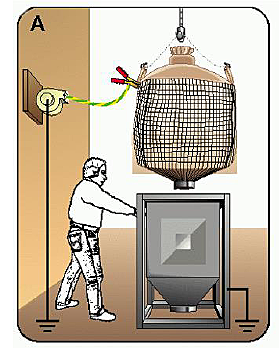
• Grounding of all conductive containers, bulk bags <br><br>• Grounding of all <br>conductive containers, <br>bulk bags 


Measures in Handling of combustible dusts in practice: <br>Measures in Handling of combustible <br>dusts in practice:
<br>
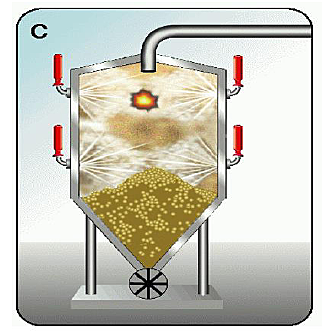
• Explosion suppression as construct Explosion Protecion <br><br>• Explosion suppression <br>as construct <br>Explosion Protecion 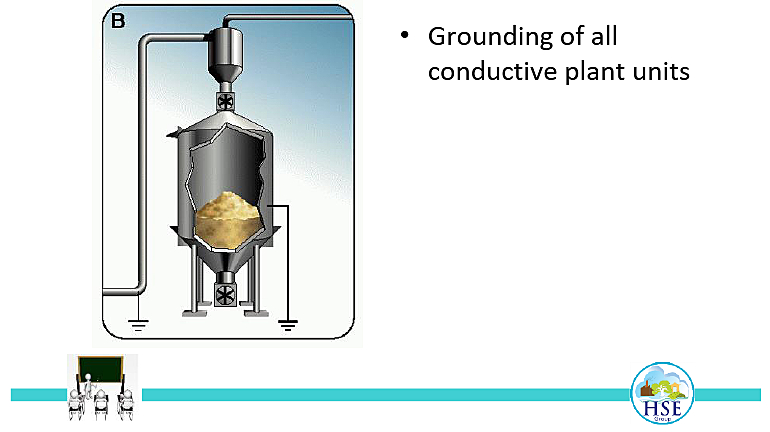


Measures in Handling of combustible dusts in practice: <br>Measures in Handling of combustible <br>dusts in practice:
Measures in Handling of combustible dusts in practice: <br>Measures in Handling of combustible <br>dusts in practice:
<br>
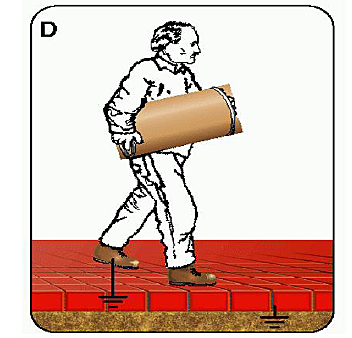
• Grounding of persons when handling bulk materials very sensitive to ignition. <br><br><br>• Grounding of persons <br>when handling bulk <br>materials very <br>sensitive to ignition. 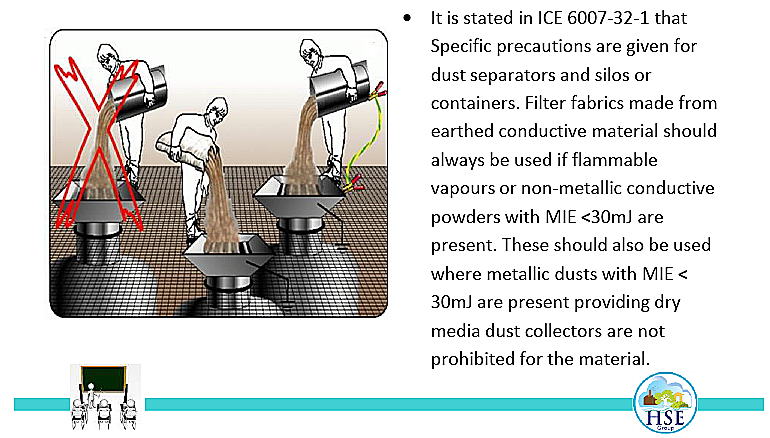

Measures in Handling of combustible dusts in practice: <br>Measures in Handling of combustible <br>dusts in practice:
Conclusion Conclusion
<br>
• It is stated in Section 5.3.3.4 of NFPA 77 if energy released from the activity is equal that MIE of the product, the chances of ignition can occur. <br><br>• It is stated in Section 5.3.3.4 of NFPA 77 if energy released <br>from the activity is equal that MIE of the product, the chances <br>of ignition can occur. 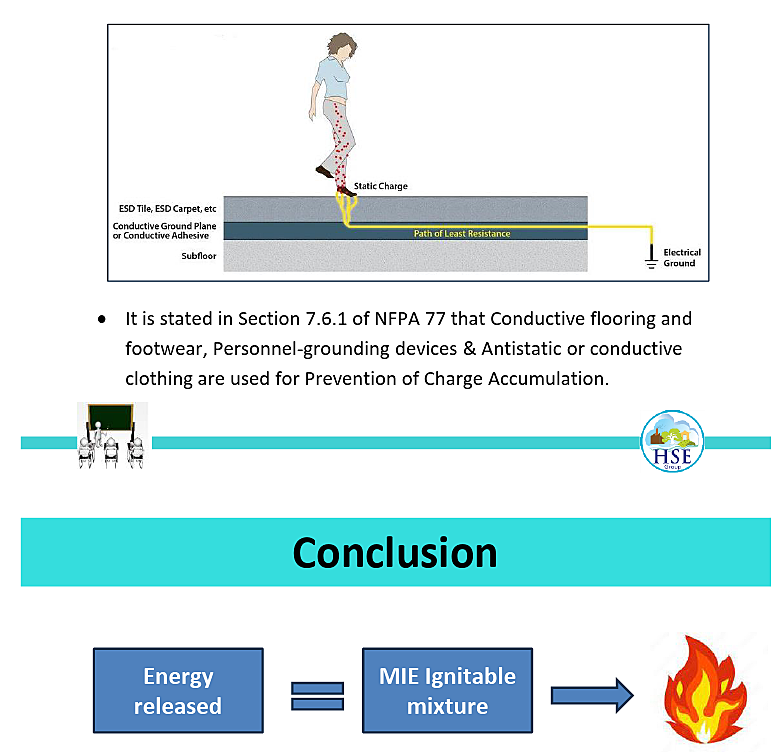


Conclusion Conclusion
<br>
• Section 10.1.2.4 of NFPA 77 states that powders that have minimum ignition energies (MIEs) of 10 mJ or less should be loaded only into containers of 2 m3 or less, unless the vessel is inerted <br><br><br><br><br>• Section 10.1.2.4 of NFPA 77 <br>states that powders that have <br>minimum ignition energies (MIEs) <br>of 10 mJ or less should be loaded <br>only into containers of 2 m3 or <br>less, unless the vessel is inerted 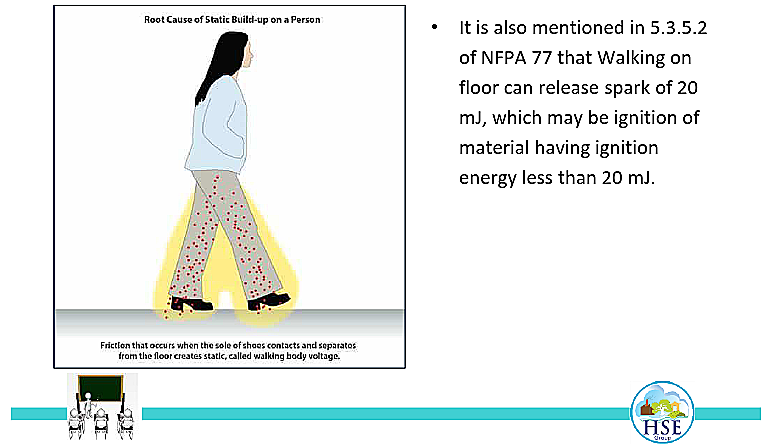

Conclusion Conclusion
Conclusion Conclusion
<br>