
Project Overview
HSE RMS conducted a comprehensive Hazard and Operability (HAZOP) Study for the Blast Furnace at ArcelorMittal and Nippon Steel India Private Limited (AM/NS India), located in Hazira, Gujarat. The study was carried out in accordance with IEC 61882:2001, a globally accepted standard for HAZOP studies.
The primary objective was to systematically identify potential hazards and operability issues arising from deviations from the design and operating intent of the blast furnace system. Given the complexity and criticality of iron-making operations, a structured and disciplined hazard analysis was essential to enhance safety, reliability, and emergency preparedness.
Objective of the Study
The objective of the HAZOP study was to:
- Identify potential hazards and operability issues associated with the blast furnace and its auxiliary systems
- Reduce the likelihood and consequences of incidents impacting:
- Personnel safety
- Plant integrity
- Environmental performance
- Operational reliability
The study focused on ensuring that risks were reduced to ALARP (As Low As Reasonably Practicable) levels through effective safeguards and practical recommendations.
Methodology Adopted
1. HAZOP Preparation
Prior to the on-site study, the HSE RMS team requested and reviewed key project documents, including:
- Piping and Instrumentation Diagrams (P&IDs)
- Process descriptions
- Standard Operating Procedures (SOPs)
- Cause and Effect (C&E) diagrams
Based on this review, process nodes were identified and discussed with the AM/NS blast furnace team. These nodes were finalised before commencement of the HAZOP sessions, ensuring efficient and focused analysis.
2. Opening Meeting
The HAZOP process began with a structured opening meeting where:
- Study objectives were clearly outlined
- Roles and responsibilities were defined
- The HAZOP methodology and procedure were explained
- Commitment was obtained from the AM/NS blast furnace team
This alignment ensured active participation and effective collaboration throughout the study.
3. HAZOP Brainstorming Sessions
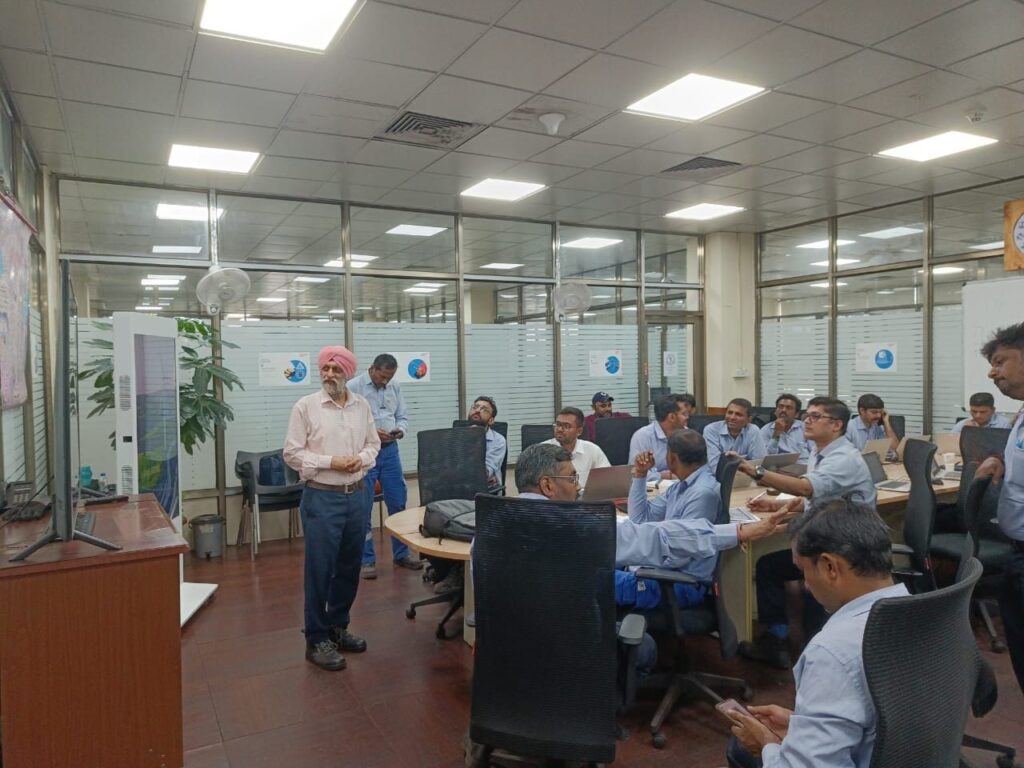
The HAZOP study followed a team-based approach, recognising that multidisciplinary brainstorming identifies more hazards than individual analysis.
The HAZOP team comprised professionals with diverse expertise, enabling thorough examination of the process under study. For each node:
- A process parameter (e.g., flow, pressure, temperature) was selected
- An intended operation was defined
- Guidewords were combined with parameters to identify deviations
- Example: “No” + “Flow” → “No Flow”
For each deviation, the team systematically identified:
- Credible causes
- Possible consequences
- Existing safeguards
- Risk ranking
- Recommendations, where required
This process was repeated for all deviations and nodes until completion of the study.
Risk Ranking and Safeguard Philosophy
Risk Ranking Approach
Risk ranking was carried out in three stages:
- Initial risk without safeguards
- Mitigated risk considering existing safeguards
- Residual risk after HAZOP recommendations
This approach ensured transparent evaluation of risk reduction effectiveness.
Standards and Guidelines Referenced
The study was conducted using widely accepted national and international standards, including:
- IEC 61882:2001
- Centre for Chemical Process Safety (CCPS) guidelines
- Gujarat Factory Rules
- Indian Standards
- Material Safety Data Sheets (MSDS)
- ECHA chemical information databases
Safeguard Identification Rules
Safeguards were identified and evaluated using a disciplined framework, including:
- Safeguards must act before the event occurs
- A balanced combination of preventive and mitigative safeguards
- Limited reliance on administrative controls
- Preference for independent, measurable, and auditable safeguards
- Consideration of Probability of Failure on Demand (PFD) and Risk Reduction Factor (RRF)
- Avoidance of double-counting redundant protection layers
This ensured realistic and defensible risk reduction outcomes.
Key Outcomes of the Study
- Initial risk ranking identified several High and Extreme risk scenarios
- Existing safeguards reduced many risks; however, additional mitigation was required for some scenarios
- All High and Extreme risks were mitigated through HAZOP recommendations
- Tolerable and Moderate risks were largely well controlled
- Certain scenarios were recommended for further detailed analysis
The study significantly improved overall process safety and operational robustness of the blast furnace system.
Conclusion
This HAZOP case study demonstrates the effectiveness of a structured, standards-based hazard identification approach for complex iron-making operations. Through systematic analysis, multidisciplinary participation, and practical recommendations, HSE RMS successfully reduced risk levels and strengthened the safety and reliability of blast furnace operations at AM/NS India.
The case highlights the critical role of HAZOP studies in identifying hidden hazards, improving safeguard effectiveness, and supporting safe, sustainable industrial operations.