

DHA Case Study – Fenhexamide, Superform Chemistries Ltd.
Project Number: 25-753.04.53_59.02-upl-akv-hac-dha
DHA Serial No: 02
- Project Overview
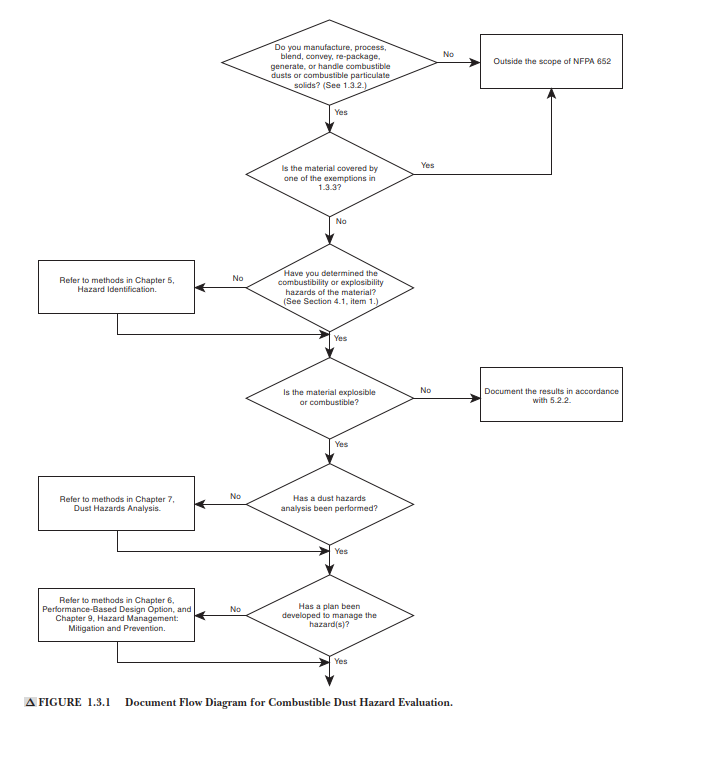
A Dust Hazard Analysis (DHA) Study was conducted for the Fenhexamide powder processing facilities at Superform Chemistries Limited (SCL), Ankleshwar, Gujarat, in accordance with NFPA 652 – Standard on the Fundamentals of Combustible Dust. The objective of the study was to systematically identify and evaluate fire, flash fire, and dust explosion hazards arising from the handling, processing, transfer, and storage of combustible dusts, and to assess the adequacy of existing preventive and protective measures.
The study involved a detailed review of critical project documents including Piping and Instrumentation Diagrams (P&IDs), Material Safety Data Sheets (MSDS), Standard Operating Procedures (SOPs), hazardous area classification schedules, and process design information. A multidisciplinary team analyzed potential dust release scenarios, ignition sources, consequences, existing safeguards, and risk levels across defined nodes, and developed recommendations to mitigate dust-related fire and explosion risks. The DHA provides a structured basis to enhance dust safety management, regulatory compliance, and safe, reliable operation of the facility.
- Objective
To identify the hazards associated with Fenhexamide powder processing and handling and to reduce the likelihood and/or consequences of incidents that could adversely impact personnel, plant, and the environment.
The study also aims to evaluate credible dust fire and explosion scenarios, assess the adequacy of existing preventive and protective measures, and identify gaps requiring additional controls. The outcomes support risk reduction to acceptable levels through improved engineering, operational practices, and compliance with applicable combustible dust safety standards.
- Methodology
DHA Preparation
Before arriving on-site, our team requested and analyzed essential data and prepared a checklist both general (applicable for all the equipment) and a equipment specific checklist.
Opening Meeting
We initiated the on-site DHA process with an opening meeting to outline objectives, clarify roles, define the DHA methodology and procedure and gain commitment from the SCL team.
DHA Brainstorming Session
- Identification and evaluation of the process or facility areas where fire, flash fire, and explosion hazards exist.
- Where such a hazard exists, identification and evaluation of specific fire and deflagration scenarios shall include the following:
- Identification of safe operating ranges
- Identification of the safeguards that are in place to manage fire, deflagration, and explosion events
- Recommendation of additional safeguards where warranted, including a plan for implementation
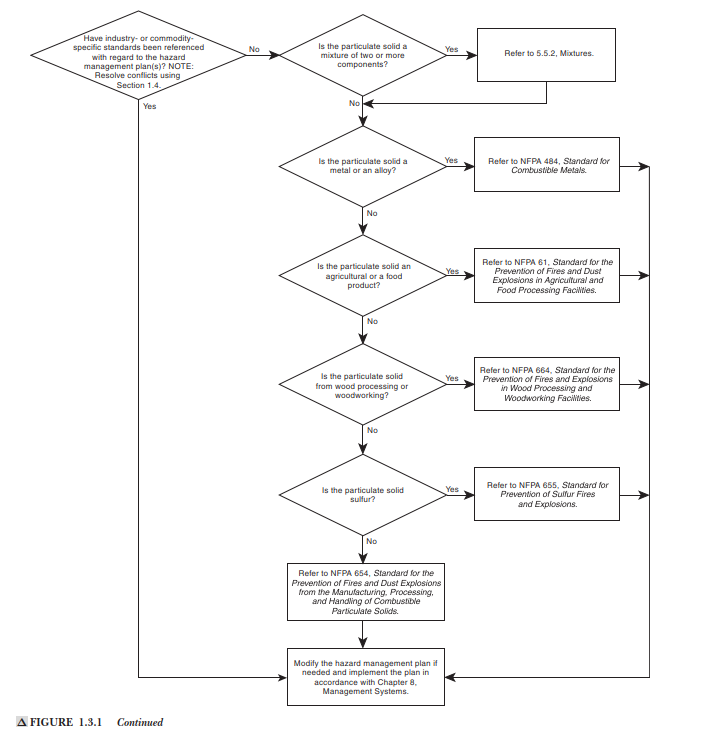
- Material Evaluation: – The DHA shall be based on data obtained in accordance with Chapter 5 of NFPA for material that is representative of the dust present.
- Process Systems. Each part of the process system where combustible dust is present or where combustible particulate solids could cause combustible dust to be present shall be evaluated, and the evaluation shall address the following:
- Potential intended and unintended combustible dust transport between parts of the process system.
- Potential fugitive combustible dust emissions into a building or building compartments.
- Potential deflagration propagation between parts of the process system
- Each part of the process that contains a combustible particulate solid and that can potentially include both of the following conditions shall be considered a fire hazard and shall be documented as such:
- Oxidizing atmosphere
- Credible ignition source
- Each part of the process that contains a sufficient quantity of combustible dust to propagate a deflagration and that can potentially include all the following conditions shall be considered a dust deflagration hazard and shall be documented as such:
- Oxidizing atmosphere
- Credible ignition source
- Credible suspension mechanism
- Building or Building Compartments.
- Each building or building compartment where combustible dust is present shall be evaluated.
- Where multiple buildings or building compartments present essentially the same hazard, a single evaluation shall be permitted to be conducted as representative of all similar buildings or building compartments.
- The evaluation shall address potential combustible dust migration between buildings or building compartments.
- The evaluation shall address potential deflagration propagation between buildings or building compartments.
- Each building or building compartment that contains a combustible particulate solid and that can potentially include both of the following conditions shall be considered a fire hazard and shall be documented as such:
- Oxidizing atmosphere
- Credible ignition source
- The evaluation of dust deflagration hazard in a building or building compartment shall include a comparison of actual or intended dust accumulation to the threshold housekeeping dust accumulation that would present a potential for flash-fire exposure to personnel or compartment failure due to explosive overpressure.
- Threshold housekeeping dust accumulation levels and nonroutine dust accumulation levels (e.g., from a process upset) shall be in accordance with relevant industry- or commodity-specific NFPA standards.
- Each building or building compartment that contains a sufficient quantity of combustible dust to propagate a deflagration and that can potentially include all of the following conditions shall be considered a dust deflagration hazard and shall be documented as such:
- Oxidizing atmosphere
- Credible ignition source
- Credible suspension mechanism
Key distinctive characteristics of DHA Study:
- Detailed and comprehensive checklist for DHA was used having more than 30 points.
- The DHA Session was documented using Process Hazard Analysis Software (PHA Pro v8), which aligns with industry Standard. This helped us to record the DHA session in a very efficient manner.
- Detailed worksheet for DHA was presented in the following format

- Along with the checklist the DHA was carried out using the above Risk Assessment Format. Following area were inspected thoroughly through risk Assessment technique
- Ignition Source (static, hot surfaces-equipment, hot surfaces – gland/seal friction, electrostatic discharge)
- Housekeeping
- Protection measure
- Hazard assessment
- Startup/Shutdown Procedure
- Emergency Shutdown Procedure
- Fire Explosion
- Key Outcomes
- Systematic Identification of Dust Fire and Explosion Hazards – The DHA identified credible dust release, ignition, fire, and deflagration scenarios associated with Fenhexamide powder processing across charging, drying, blending, sieving, and packing operations.
- Risk-Based Evaluation of Existing Safeguards – Existing engineering, operational, and administrative controls such as inertization, earthing and bonding, ventilation, interlocks, and housekeeping practices were evaluated for adequacy against NFPA 652 requirements.
- Identification of Gaps and Improvement Areas – The study identified deficiencies related to dust containment, ignition source control, static electricity management, explosion protection, SOP coverage, and equipment integrity that could contribute to dust-related incidents.
- Development of Actionable Recommendations – A total of 49 specific, risk-reduction recommendations were generated, covering engineering modifications, procedural controls, instrumentation interlocks, and personnel protective measures.
- Strengthened Basis for Dust Safety Management and Compliance – The DHA provides a structured foundation for improving combustible dust safety, enhancing regulatory compliance with NFPA 652, and supporting safe, reliable, and sustainable plant operations.
- The team has identified for following potential risk and provided DHA recommendations at all places where risk were not met in ALARP region (described by yellow). All the risk were mitigated by DHA recommendations.
- Conclusion
The Dust Hazard Analysis (DHA) study concluded that the Fenhexamide powder processing facilities are generally well-designed with established controls for managing combustible dust hazards. Implementation of the identified recommendations will further reduce the likelihood and consequences of dust fire and explosion scenarios and enhance operational safety, housekeeping effectiveness, and ignition source control. Overall, the study highlights the importance of systematic dust hazard identification, multidisciplinary participation, and timely implementation of recommendations in achieving safe, reliable, and compliant powder handling and processing operations.