Electrostatic Hazard- Static Electricity on Personnel as per IS-7689

HSE Risk Management Services Pvt. LtdSCO-30 2nd floor Near V.R Mall, TDI Business centre Sector 118, TDI City, Mohali, Punjab-140501Mail id: yashpal@hse-rms.comContact No.: 9012200076, 9012100076, 82880 88030Website: www.hse-rms.comHSE Risk Management Services Pvt. LtdSCO-30 2nd floor Near V.R Mall, TDI Business centre Sector 118, TDI City, Mohali, Punjab-140501Mail id: yashpal@hse-rms.comContact No.: 9012200076, 9012100076, 82880 88030Website: www.hse-rms.comHSE Risk Management Services Pvt. LtdSCO-30 2nd floor Near V.R Mall, TDI Business centre Sector 118, TDI City, Mohali, Punjab-140501Mail id: yashpal@hse-rms.comContact No.: 9012200076, 9012100076, 82880 88030Website: www.hse-rms.comHSE Risk Management Services Pvt. LtdSCO-30 2nd floor Near V.R Mall, TDI Business centre Sector 118, TDI City, Mohali, Punjab-140501Mail id: yashpal@hse-rms.comContact No.: 9012200076, 9012100076, 82880 88030Website: www.hse-rms.com
HSE Risk Management Services Pvt. Ltd
SCO-30 2nd floor Near V.R Mall, TDI Business center Sector 118,
TDI City, Mohali, Punjab-140501
Mail id: yashpal@hse-rms.com
Contact No.: 9012200076, 9012100076, 82880 88030
Website: www.hse-rms.com




|
Client: M/S__ Project: Electrostatic Hazard- Static Electricity on Personnel as per IS-7689 |
||||||
|
|
||||||
|
22/09/2023 |
A |
Draft |
SS |
YSG |
YSG |
|
|
Date |
Rev |
Remarks / Revision Summary |
Prepared |
Checked |
Approved |
Approved By |
|
HSE RMSPL |
Client |
|||||
|
REVISION RECORDS |

- OBJECTIVE
To identify the charge generation due to static electricity and preventive measures to prevent static electricity on personnel
- SCOPE
This paper is limited only to preventive measures to prevent static electricity on personnel
- Reference Document
IS 7689: 1989 Guide for Control of Undesirable Static Electricity
- DEFINITIONS
- Static Electricity. Electrical effects caused by the charge imbalance between a negatively charged object and a positively charged object.
- Conductive Floor. Flooring that has an average resistance between 2.5 × 10^3 ohms and 1 × 10^6 ohms where measured using specified electrodes placed a specified distance apart.
- Minimum Ignition Energy (MIE). The smallest quantity of energy that can ignite a mixture of a specified flammable material with air or oxygen, measured by a standard procedure.
- Antistatic. Capable of dissipating a static electric charge at an acceptable rate.
- Electrification. The process that produces electric charges on an object.
- Charge Generation
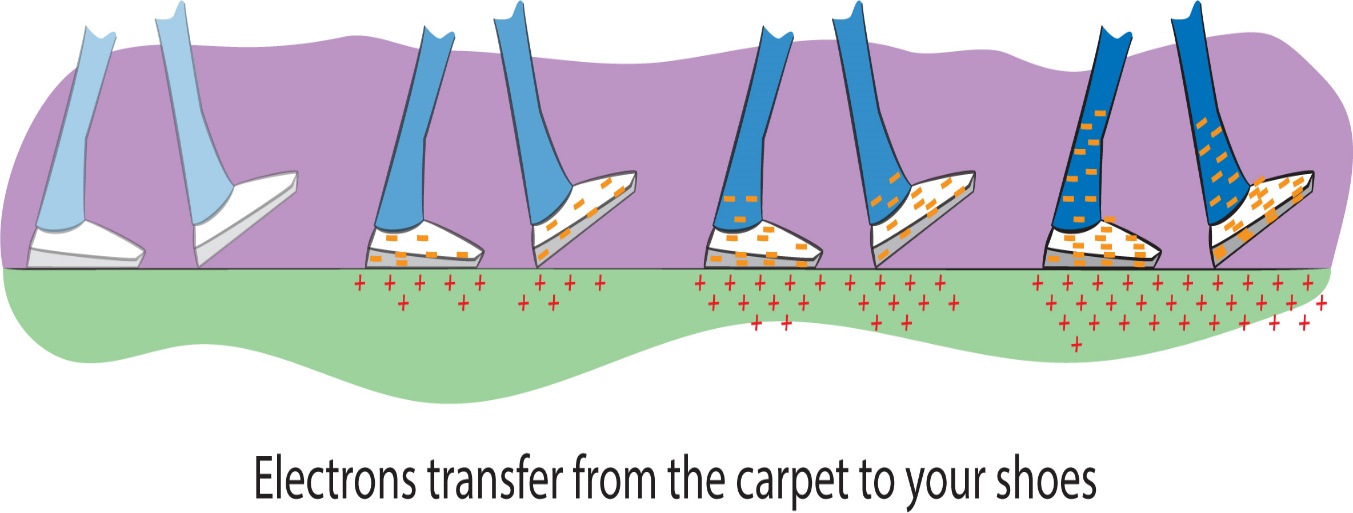
- One of the most common examples of charge generation is from our daily activity like walking on a carpet made of high resistivity material in which
- the charge separation is between the floor and the footwear,
- the body is then charged by sharing in case of conducting footwear,
- or by induction in the case of insulating footwear
- Removal of an outer garment is also one of the common examples of Charge generation, where the contact electrification is between the inner and outer layers of clothing and the body is then charged by sharing or by induction

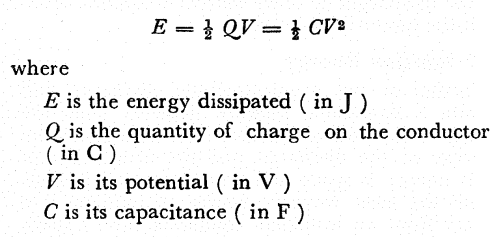
- Energy of the spark: – As per Section 7.1 of IS-7689
The energy of the spark (E) IS:-
- Discharge Involving Personnel (Minimum): – As per Section 14.2.1 of IS-7689
- Maximum Body Potential 50kV = 50,000 Volts
- Typical Body Capacitance = 100 pF to 300 pF
- Then by using the formula the minimum energy released by human body having potential of 50kV is: – Energy E=12*100*10-12*50,0002
= 125 mJ
- Discharge Involving Personnel (Maximum): – As per Section 14.2.1 of IS-7689
- Maximum Body Potential 50kV = 50,000 Volts
- Typical Body Capacitance = 100 pF to 300 pF
- Then by using the formula the maximum energy released by human body having potential of 50kV is: – Energy E=12*300*10-12*50,0002
= 375 mJ
- Discharge Involving Personnel: – As per Section 14.2.1 of IS-7689
- Not all the energy stored on the body is released in the spark discharge, the amount depending on the circumstances of the discharge.
- Consideration should be given to the need for precautions when the minimum ignition energy is less than about 100 mJ
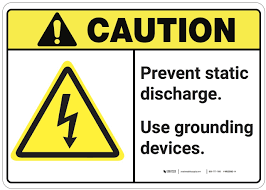
- Precautions Against Static Electricity on Personnel: – Interpretation of Section 14.3 IS-7689
Steps to prevent Static Electricity on Personnel include use of the following:
- Antistatic or conductive clothing
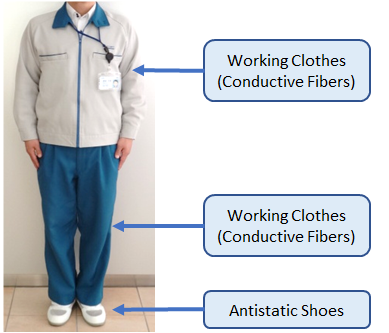
- Conductive flooring and footwear– Electrostatic dissipative (ESD) footwear used in conjunction with conductive flooring provides a means to control and dissipate static electric charges from the human body
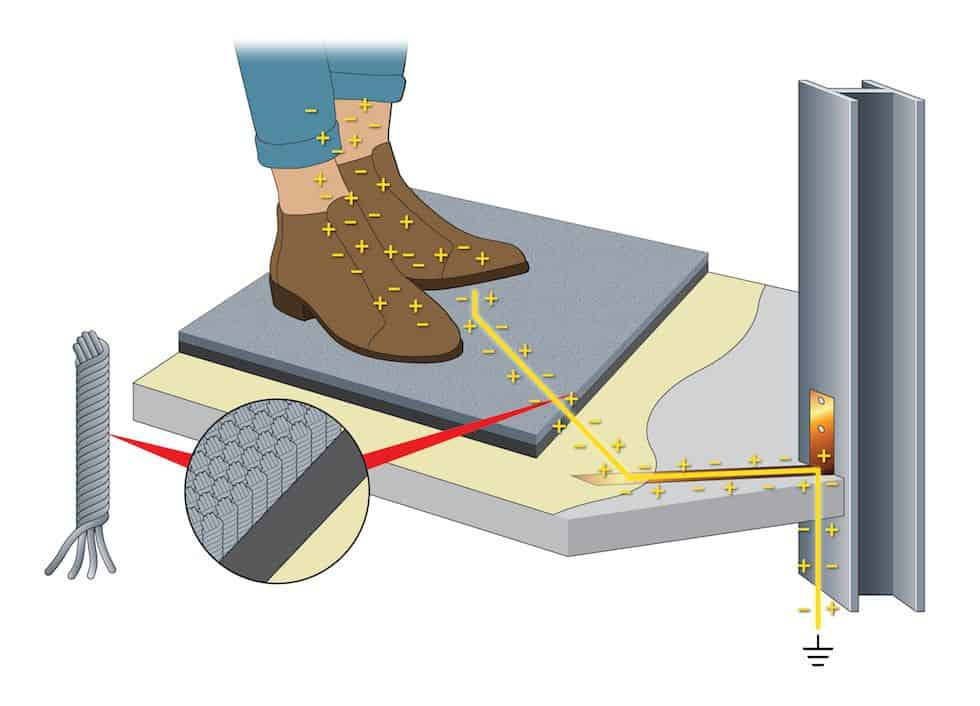
- Personnel-grounding devices
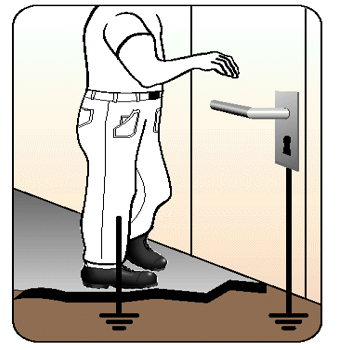
- How do door handles give out static electricity?
- Every physical thing we experience is made of electrically charged matter, which is either "positive" or "negative".
- Transfer of electrical charge from one object to human body causes Static shocks.
- Transfer of electrical charge from one object to another object called static discharge resulting in energy which may cause for fire and explosion.
- This electrostatic discharge can take the form of a spark that could cause an explosion if the person is in a flammable environment.
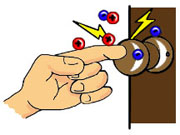
- When we walk on a carpeted floor, negative charges move into our body. Because door knobs are usually made of metal (which conducts electrical charges very well), when we touch a door knob these extra electrical charges leave our body and go to the door knob. This is what gives an electrical shock.

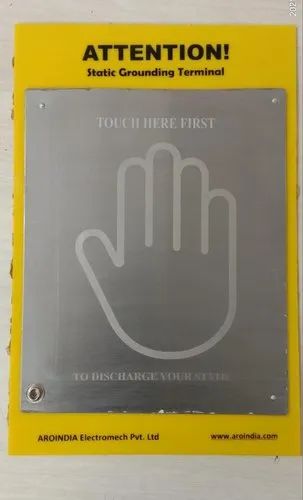
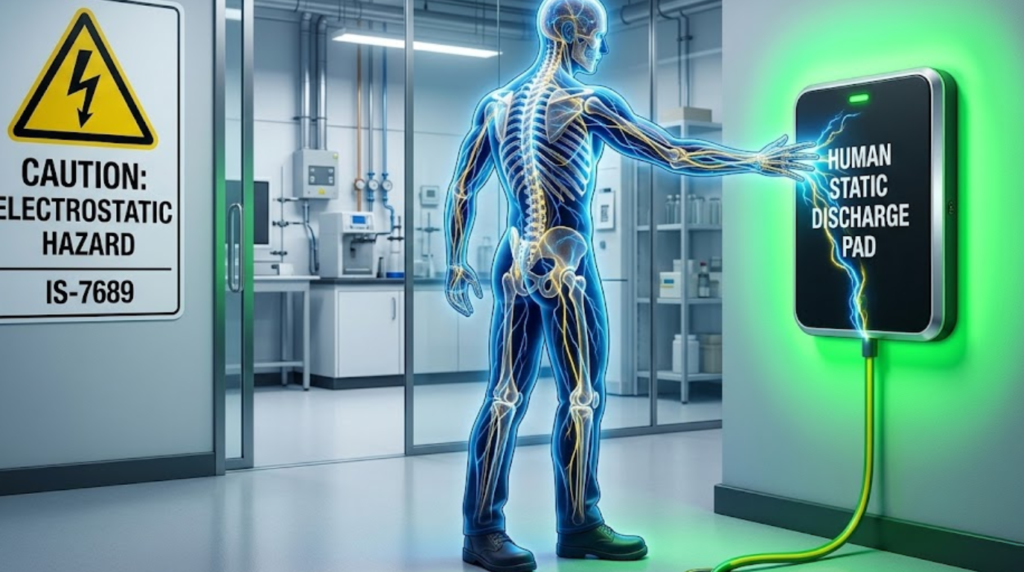
- Human Static Discharge Pads: –
- The human body generally accumulates static charges through induction.
- When a person carrying such charges touches a metallic object, an electrostatic discharge occurs without the person even being aware of it.
- This electrostatic discharge can take the form of a spark that could cause an explosion if the person is in a flammable environment.

- Human static discharge pads effectively nullify static charges from the human body.
- Placed at strategic locations in industries such as entrances, machines, partitions, etc.
- People only need to touch the pad once to remove any electrostatic charges on their bodies.
- The static dissipative layer in the discharge pad safely conducts the static charges to ground, thus reducing the risk of a potentially hazardous electrostatic discharge.