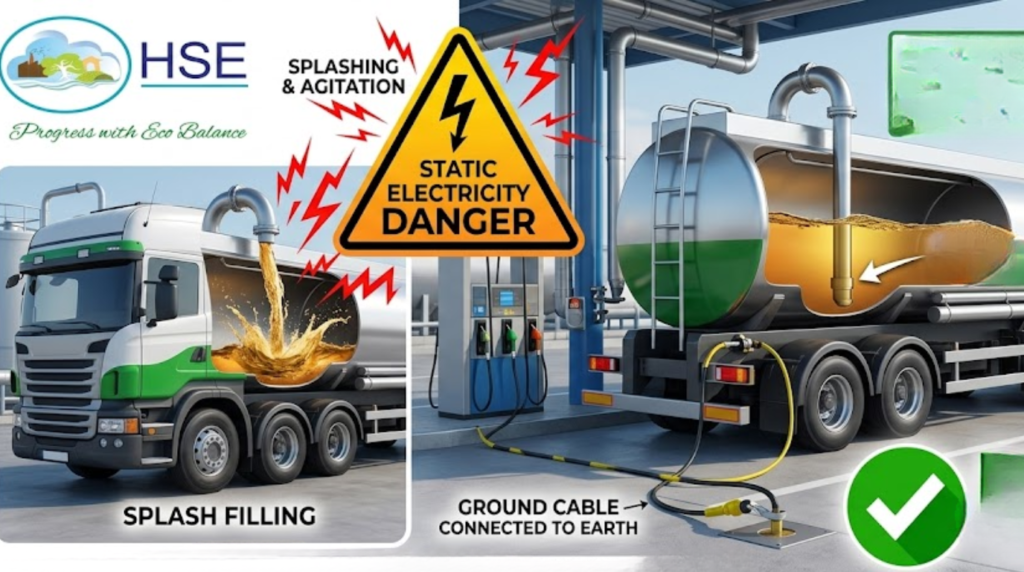
Static Electricity Hazard during Tank Vehicle (Tanker) Filling As per NFPA

HSE Risk Management Services Pvt. Ltd.SCO-30, Second floor, Sector-118,TDI City, Dist.-Mohali, Punjab-140501Website: www.hse-rms.comHSE Risk Management Services Pvt. Ltd.SCO-30, Second floor, Sector-118,TDI City, Dist.-Mohali, Punjab-140501Website: www.hse-rms.comHSE Risk Management Services Pvt. Ltd.SCO-30, Second floor, Sector-118,TDI City, Dist.-Mohali, Punjab-140501Website: www.hse-rms.comHSE Risk Management Services Pvt. Ltd.SCO-30, Second floor, Sector-118,TDI City, Dist.-Mohali, Punjab-140501Website: www.hse-rms.com
|
Client: M/s_ Project: Static Electricity Hazard Due to Tank Vehicle (Tanker) Filling as per NFPA |
||||||
|
|
||||||
|
22/09/23 |
A |
Draft Report |
AM |
SS |
YSG |
|
|
Date |
Rev |
Remarks / Revision Summary |
Prepared |
Checked |
Approved |
Approved By |
|
HSE RMSPL |
Client |
|||||
|
REVISION RECORDS |

- OBJECTIVE
To reduce Static Electricity Hazard during Tank Vehicle (Tanker) Filling.
- SCOPE OF WORK
- This paper is limited to only Electrostatic Hazards during filling of Tank Vehicles (Tanker).<br>
- Reference Documents
NFPA 77(2007)- Recommended Practice on Static Electricity
- DEFINITIONS
Static Electric Discharge: A discharge of static electricity in the form of a spark, corona discharge, brush discharge, or propagating brush discharge that might be capable of causing ignition under appropriate circumstance.
- As per NFPA 77 Section 8.3.1
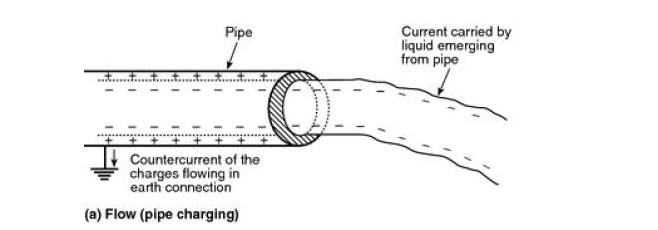
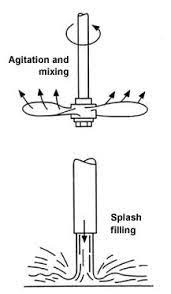
- Charge separation occurs in situations where liquids flow through pipes, hoses, and filters, as well as during transfer operations involving splashing or when liquids are stirred or agitated.
- When charges are generated, they mix with the liquid and are transported to receiving vessels, where they have the potential to accumulate over time.
<br>
Static Electricity is generated due to splashing of liquid while filling it in the Tank vehicle which can lead to fire explosion.
- Prevention of fire hazards during Tank Vehicle filing.
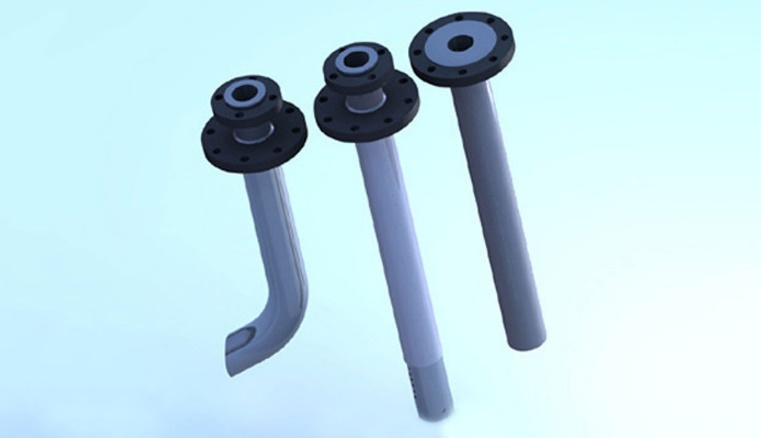
- Provide a dip pipe/fill-pipe.
- As per NFPA 77 Section 8.6
- Tank Trucks should be bonded to the fill system, and all bonding and grounding should be in place prior to the starting operations.
- For top loading, the fill pipe should form a continuous conductive path and should be in contact with the bottom of the tank.
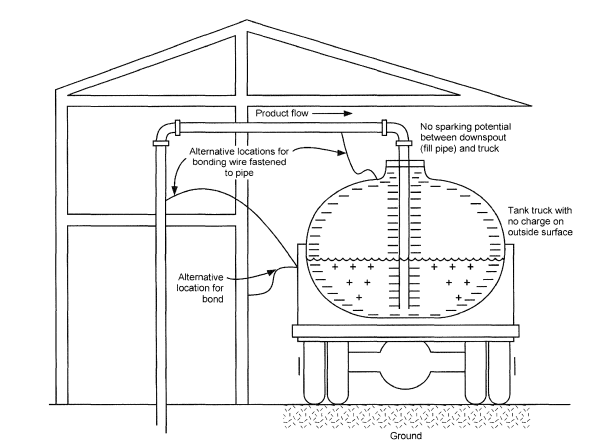
- As per NFPA 77 Section 8.6
- 2D2D2D2D"A slow start (i.e., velocity less than 1 m/sec) should be employed until the inlet into the compartment is covered by a depth equal to two fill-pipe diameters to prevent spraying and to minimize surface turbulence."
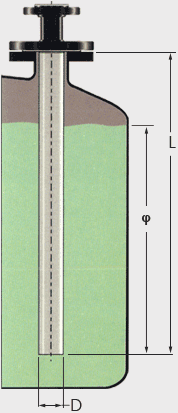
L – Entry Length of the dip pipeφ – Length of the dip pipe immersed in fluidD – Diameter of the dip pipeL – Entry Length of the dip pipeφ – Length of the dip pipe immersed in fluidD – Diameter of the dip pipeL – Entry Length of the dip pipeφ – Length of the dip pipe immersed in fluidD – Diameter of the dip pipeL – Entry Length of the dip pipeφ – Length of the dip pipe immersed in fluidD – Diameter of the dip pipe
V = Velocity of fluid through dip pipe as discussed aboveV = Velocity of fluid through dip pipe as discussed aboveV = Velocity of fluid through dip pipe as discussed aboveV = Velocity of fluid through dip pipe as discussed above <br>
As per NFPA 77 Section 8.6
- Maximum Loading Rate. The maximum loading rate should be limited so that the velocity in the fill pipe or load connection does not exceed 7 m/sec or (0.5/d) m/sec, (where d = inlet inside diameter in meters), whichever is less.(Refer Examples in further slides)<br>
- This applies to all the products being handled are nonconductive, single component liquid.
- Excessive flow rates should be avoided, either procedurally or by system design, which is the preferred method.
- Example 1:
Checking compliance of NFPA 77 Section 8.6 Loading of Tank Vehicles for safe transfer of liquid in Tank Truck (Vehicle). A Tank Truck is being filled with Toluene with a pump of flow capacity 60 m<br>3/hr. Determine whether a 2-inch (SCH 40) dip pipe size is safe to use with respect to electrostatic hazards. <br><br>Step 1: Dip Pipe Nominal Size: 2 inch (Sch 40)<br>Step 2: Dip Pipe Internal diameter (D) = 0.0525m<br>Step 3: As per NFPA 77 Section 8.6 Maximum loading rate = 0.5/D = 0.5/0.0525 = 9.84 m/s. <br>The calculated velocity is more than 7 m/s. Thus, maximum allowable velocity through dip pipe is <br>7 m/s.<br>Step 4: Determine velocity through dip pipe of 2-inch NPS with flow capacity 60 m3/hr. Velocity of liquid through dip pipe = Volumetric Flow rate/Area of dip pipe <br>Velocity of liquid through dip pipe = 60 (m<br>3/hr) / (πD24)(m2) = 60 / ( 3.14*(0.0525)24 ) Velocity of liquid through dip pipe = 27716.7 m/hr = 7.69 m/sec.
Conclusion <br>As evident from step 3 and step 4, using a 2-inch pipe with flow capacity of 60 m3/hr will result in velocity of 7.69 m/sec in dip pipe whereas the maximum flow velocity through the 2-inch dip pipe is 7 m/sec.
Thus, we can say that 2-inch pipe is inadequate and is not safe to use as per NFPA 77 Section 8.6<br>
- Example 2:
Checking compliance of NFPA 77 Section 8.6 Loading of Tank Vehicles for safe transfer of liquid in Tank Truck (Vehicle). A Tank Truck is being filled with Toluene with a pump of flow capacity 60 m<br>3/hr. Determine whether a 3-inch (SCH 40) dip pipe size is safe to use with respect to electrostatic hazards. <br><br>Step 1: Dip Pipe Nominal Size: 3 inch (Sch 40)<br>Step 2: Dip Pipe Internal diameter (D) = 0.0779m<br>Step 3: As per NFPA 77 Section 8.6 Maximum loading rate = 0.5/D = 0.5/ 0.0779 = 6.41 m/s <br>The calculated velocity is less than 7 m/s. <br>Thus, maximum allowable velocity through dip pipe of is 6.41m/s.<br>Step 4: Determine velocity through dip pipe of 3 inch NPS with flow capacity 60 m3/hr.Velocity of liquid through dip pipe = Volumetric Flow rate/Area of dip pipe <br>Velocity of liquid through dip pipe = 60 (m<br>3/hr) / (πD24)(m2) = 60 / ( 3.14*(0.0779)24 ) Velocity of liquid through dip pipe = 12588.86 m/hr = 3.49 m/sec
Conclusion: <br>As evident from step 3 and step 4, using a 3-inch pipe with flow capacity of 60 m3/hr will result in velocity of 3.49 m/sec in dip pipe whereas the maximum flow velocity through the 3-inch dip pipe 6.41 m/sec.
Thus, we can say that 3-inch pipe is adequate and is safe to use as per NFPA 77 Section.