Incident Investigation Case Study – Excel Industries, Ratnagiri
Project Number: 24-731.58.01-eil-rn-ii
Incident Investigation Study No.: 01
- Project Overview
An Incident Investigation Study was conducted for a leakage incident involving the PCl₃ reactor (V-3402) at Excel Industries Limited, Ratnagiri, Maharashtra.
The study aimed to identify the root causes of reactor damage, including leakage at welding joints, sparger damage, and reactor deformation. The incident occurred during normal operation involving phosphorus (P₄) and chlorine (Cl₂) handling, leading to gas release and localized fire, which was promptly controlled by the operations team.
The investigation was carried out using a structured methodology involving site inspection, data review, technical analysis, and root cause evaluation to enhance process safety and prevent recurrence.
- Objective
- To investigate the root causes of PCl₃ reactor leakage
- To analyse equipment damage mechanisms (corrosion, erosion, structural issues)
- To evaluate process and operational conditions contributing to the incident
- To recommend corrective and preventive measures
- To enhance overall process safety and reliability.
- Methodology
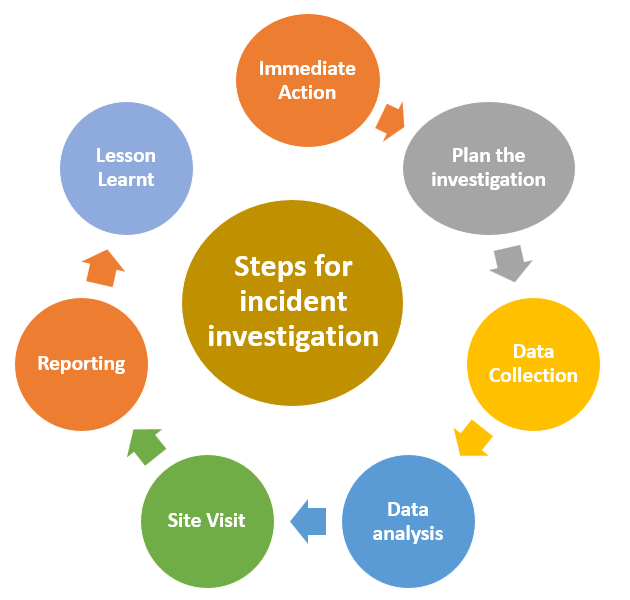
- Data Collection: Gathering relevant information and evidence related to the problem or incident, which serves as the basis for analysis such as photographs, videos, witness statements, and documents. Record initial observations and conditions.
- Data Review: Reviewing evidence, reconstruct the incident timeline, and identify key events and actions leading up to the incident.
- Preparation for the site visit:
Material:
- Technical Information Regarding the Incident: Collect and review all pertinent technical details related to the incident.
- Evidence Collection List: Identify and organize all evidence that needs to be gathered on-site.
- Previous Inspection Reports and Certificates: Gather any previous inspection reports, test results, or certificates related to the equipment or site.
- Asset Management Guidelines: Familiarize yourself with the asset management guidelines.
- Incident History: Examine the history of previous incidents related to equipment or other factors.
Machine:
- HAZOP, QRA, Risk Assessment, and Critical Equipment: Assess the HAZOP (Hazard and Operability Study), Quantitative Risk Assessment (QRA), risk assessments, and critical equipment involved.
- Available Barriers and Their Status: Check the status of any existing barriers and their effectiveness.
Man:
- Interview List: Prepare a list of individuals to be interviewed or questioned during the site visit.
- Competency, PSI, Training, Audit, and Monitoring: Review information on competency, Pre-Startup Safety Reviews (PSI), training records, audits, and monitoring practices.
Method:
- Relevant SOPs and Guidelines: Ensure you have access to or identify any required Standard Operating Procedures and guidelines.
- Applicable Rules, Acts, and Standards: Review the rules, acts, and standards relevant to the incident.
- Potential Causes: Develop initial hypotheses about the probable causes of the incident based on the information at hand.
Measurement:
- Evidence Collection List: Identify and organize all evidence that needs to be gathered on-site (includes measurement of evidence).
Site visit:
- Collect and Analyze Supporting Documents: Gather and review technical information and documents related to the incident at the site.
- Interrogate Concerned Persons: Interview individuals who have relevant knowledge or involvement with the incident.
- Collect Evidence: Obtain physical and digital evidence from the incident site.
- If, after the site visit, reviewing all the evidence, and interrogating all relevant individuals, we are unable to determine the cause and reason behind the incident, we will proceed with a root cause analysis.
- Draft Report Preparation: Once the analysis is complete, a draft report is prepared to document the findings of the incident investigation process. The report typically includes an overview of the problem, a summary of the data collected and reviewed, the analysis, findings regarding causal factors and root causes, and initial recommendations for corrective actions.
- Comments Incorporation along with CRS: The draft report is then circulated for review and feedback. Comments and suggestions are incorporated into the report, and a Comment Resolution Sheet (CRS) is shared.
- Final Report: Based on the feedback received and any revisions made, a final report is prepared.
- Key Distinctive Characteristics
- Comprehensive Root Cause Analysis – Covering mechanical, process, and operational aspects
- Multi-Failure Mechanism Evaluation – Corrosion, erosion, thermal imbalance, and design issues
- Integration of Heat Balance Study – Assessment of chlorine vaporization and cooling adequacy
- Why-Why Analytical Approach – Structured identification of underlying causes
- Action-Oriented Recommendations – Engineering and operational improvements
- Key Outcomes
- Root Causes Systematically Identified across process, equipment, and operational domains
- Critical Process Interactions Better Understood (cooling, vaporization, and reaction dynamics)
- Opportunities Identified for Equipment Reliability Enhancement (sparger, reactor integrity)
- Improved Insight into Corrosion & Erosion Mechanisms under operating conditions
- Comprehensive Recommendations Developed to strengthen safety and prevent recurrence.
- Conclusion
The Incident Investigation Study of the PCl₃ reactor leakage provides a detailed understanding of the complex interactions between process conditions, equipment design, and operational practices.
The analysis highlights that multiple contributing factors—including thermal imbalance, material degradation, and process conditions—played a role in the incident. The study establishes a strong foundation for improving reactor integrity, optimizing process parameters, and strengthening operational controls.
Implementation of the recommendations will significantly enhance plant safety, reduce the likelihood of similar incidents, and improve overall system reliability.